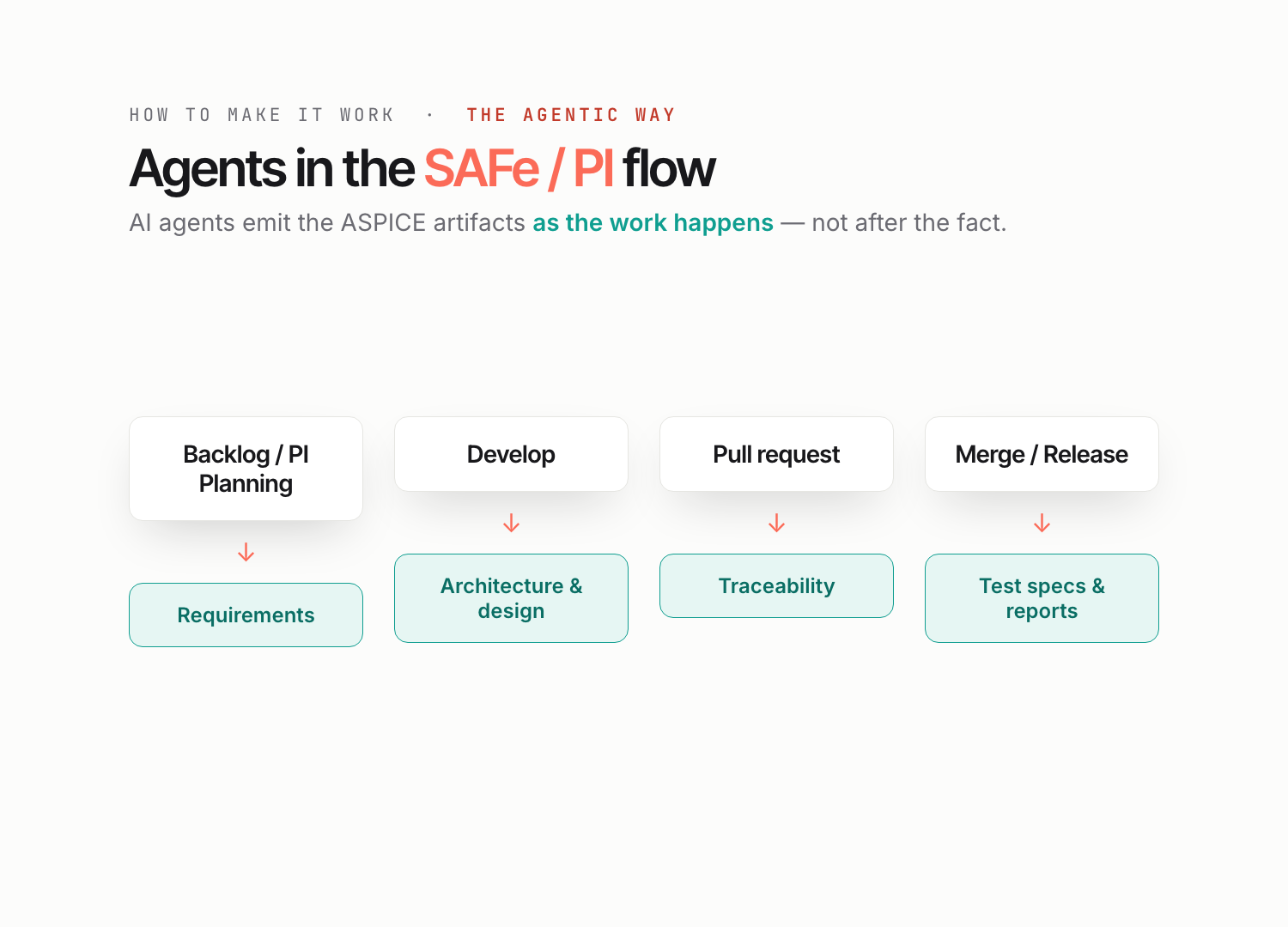
The ASPICE tool landscape, sorted by what each category actually does for an assessment — and why owning more of them hasn't stopped teams failing.
ASPICE tooling falls into four categories: (1) ALM / requirements management (IBM DOORS & DOORS Next, Siemens Polarion, PTC Codebeamer, Jama Connect) where requirements, architecture and tests are held and linked; (2) modeling & design (Enterprise Architect, IBM Rhapsody, MATLAB/Simulink); (3) traceability, assessment & gap tooling that checks work products against the model; and (4) the newest category — AI agents that generate assessment-ready work products (traceability records, review records, test specs) as a byproduct of engineering work, each with a confidence score and audit trail. No tool grants ASPICE capability by itself; the tool has to make the evidence exist without doubling your headcount.
Search “best ASPICE tools” and you get vendor lists that are really just ALM ads. Here's the honest version: the categories, what each is genuinely for, real examples, and the uncomfortable fact that most teams already own plenty of these and still fail. Inclusion here is not endorsement — verify any tool against your own context.
Cut through the feature lists and the job is narrow: hold requirements, architecture, design, and tests, and maintain bidirectional traceability across them — SYS.2 → SWE.1 → SWE.3 → SWE.4 → SWE.6 → SYS.5 — that survives change. Then produce the work products the model asks for (change, review, communication records) with enough control to reach CL2, the level most OEMs demand. Everything below is judged on how well it does that.
IBM DOORS & DOORS Next, Siemens Polarion, PTC Codebeamer, Jama Connect. Where requirements, architecture and tests live and get linked. Strong at storage and links; the weakness is that the links are maintained by hand and decay the moment requirements change.
Enterprise Architect, IBM Rhapsody, MATLAB/Simulink. Produce the SWE.2 / SWE.3 architecture and design work products (and, with Simulink, generated code). Powerful, and heavy — another surface to keep traced and in sync.
Tools, checklists and templates that check work products and traceability against the ASPICE process reference model, run gap analyses, and prepare assessments. They tell you where the evidence is missing — they don't produce it.
The SWE.4–SWE.6 and SYS.5 side: unit, integration and qualification evidence, coverage, and test management. Essential, and often where traceability to requirements quietly breaks.
Agents that generate the traced V-model and its work products from code and intent, each with a confidence score and audit trail. This is where Vera sits — read automating ASPICE with AI agents. Not another system of record; the thing that fills the records.
Here's the part the vendor lists skip. Plenty of teams already own DOORS and Enterprise Architect and a full test suite — and still fail assessments. Because the tools hold data, but the evidence is still produced by hand, late, and it decays the moment requirements change. Buying another ALM seat doesn't change the arithmetic: for every one engineer doing the work, you still need another to document it.
“For every one engineer doing the work, you need another to document it. Another ALM seat doesn't change that — it just gives the second engineer a nicer place to type.”The practitioner view
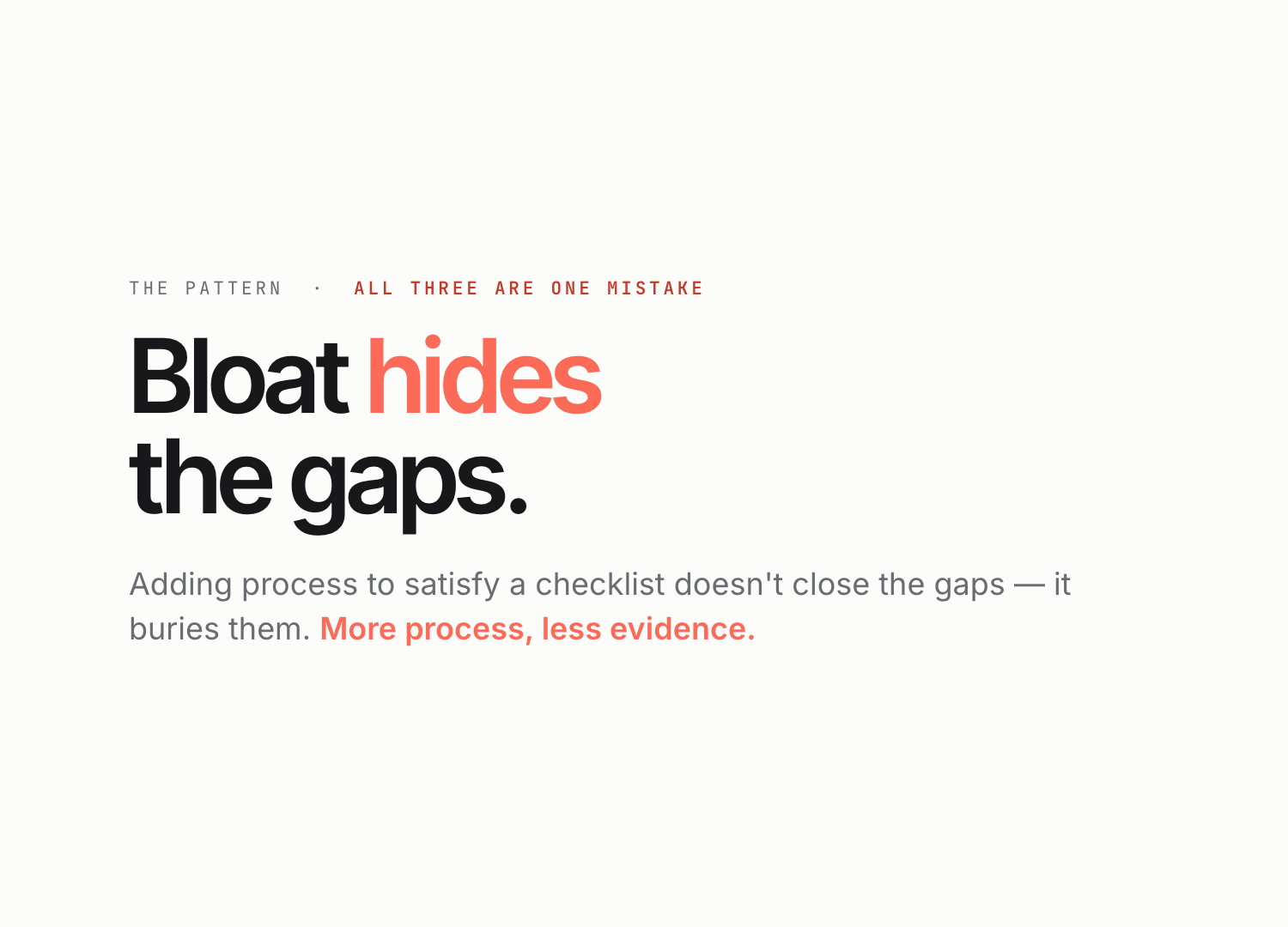
The question worth asking isn't “which ALM,” it's: does this make the evidence a byproduct of the build, or a separate job? The tools that move the needle generate work products and traceability continuously in CI, with confidence scores and audit trails an assessor can trust — no hallucination, no AI slop. That's the shift from tooling that stores evidence to tooling that produces it.
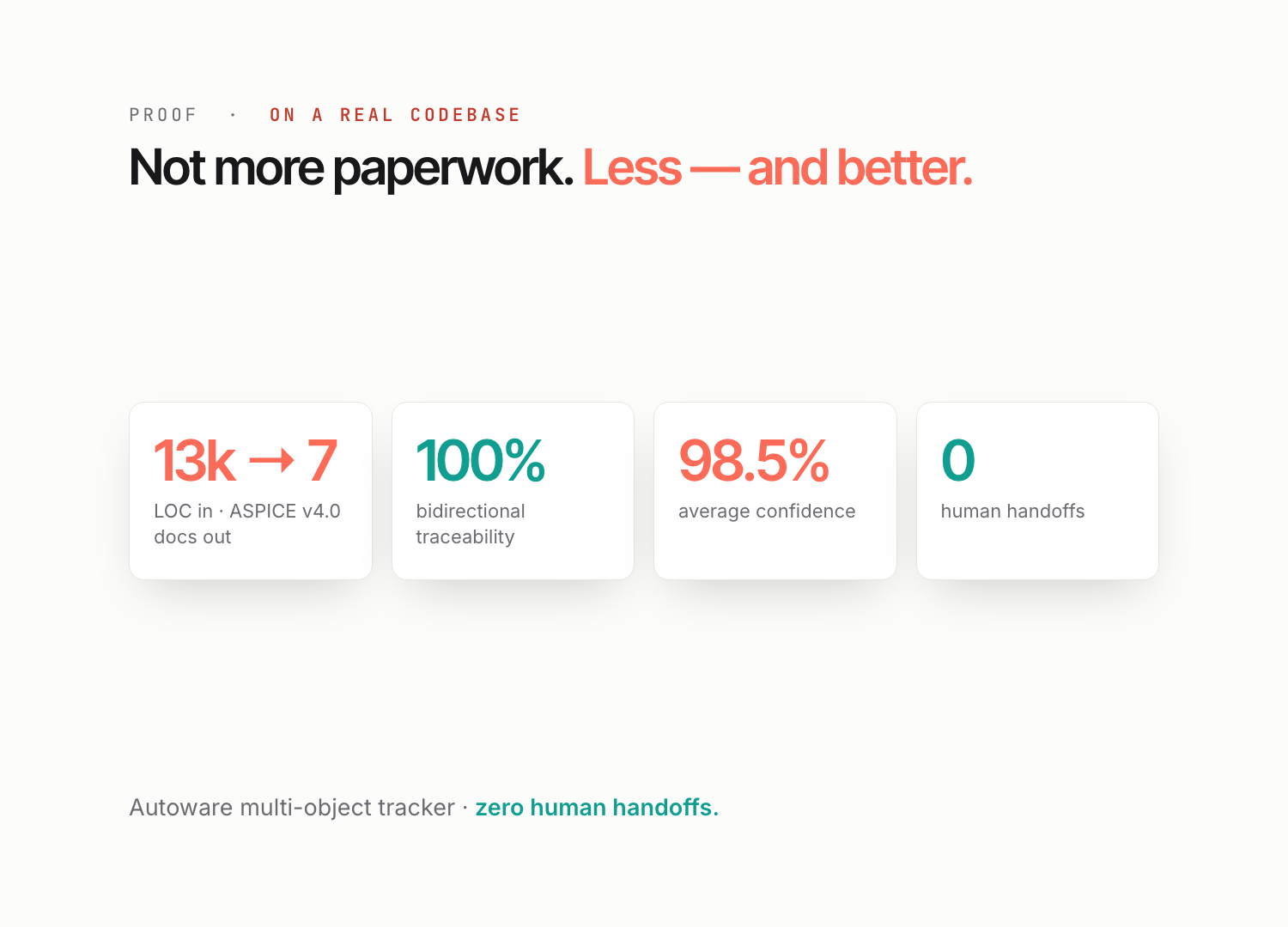
Vera is not another ALM. It sits on top of your code and your existing tools and builds the assessment evidence — the traced V-model and its work products — as a byproduct of the build. Think of it as the AI-agent category above, pointed at your repository. Suppliers keep telling us the same thing: “we don't want more process people, we want the evidence to exist.” That's the job Vera does. Prefer open source? See the automotive open-source register for tools like Doorstop, StrictDoc and Sphinx-Needs, and the systems-engineering tooling guide.
At minimum: an ALM / requirements tool (DOORS, Polarion, Codebeamer, Jama) for requirements and traceability, modeling/design tools (Enterprise Architect, Rhapsody, Simulink), and test/verification tooling for the right arm of the V. Increasingly, teams add AI agents that generate the work products and traceability automatically.
No. DOORS is common, but ASPICE does not mandate any specific tool. What matters is that requirements, architecture, design and tests are managed with consistent bidirectional traceability and controlled work products — by any tool, or generated by agents.
Yes, for parts of it — Doorstop, StrictDoc and Sphinx-Needs for requirements-as-code and traceability, among others. See our automotive open-source register. They cover pieces of the V-model rather than the whole assessment.
Yes. The newest category of ASPICE tooling uses AI agents to generate assessment-ready work products — traceability, review records, test specs — as a byproduct of engineering work, each with a confidence score and audit trail, without adding documentation headcount.
No. Tools store and check evidence; they don't grant capability. You pass on whether the evidence exists, is consistent and current, plus your own process ownership. That's why tooling that produces evidence continuously matters more than tooling that merely stores it.
Grounded in the standard, honest about the theater: What is ASPICE · Automating ASPICE with AI agents · ASPICE vs CMMI · Agile ASPICE